June 7, 2026

Lexi: Why Wyoming Families Must Remember Her Name

Life

Alexis “Lexi” Lynn Arguello was eighteen years old when she died after an abortion in Fort Collins. It took a court order before anyone outside her family was allowed to learn why.

By Krista Riester
Pro-Life Liaison, Wyoming Family Alliance

Originally published June 7, 2026.

I was eighteen years old when I donned a white bridal gown, walked down the aisle, and made my wedding vows to my husband. My whole future lay before me.

Alexis “Lexi” Lynn Arguello was eighteen years old when she died.

Such disparate outcomes are hard to comprehend.

Her life ended following an abortion at a Planned Parenthood facility in Fort Collins, Colorado.

And if you’ve never heard her name before, I’m not surprised.

A Life Cut Short

Lexi was unknowingly 21 weeks 6 days pregnant when she went to Planned Parenthood, believing she had a urinary tract infection. Instead, she learned she was pregnant and underwent a D&E (dilation and evacuation) dismemberment surgical abortion on February 6, 2025.

Two living human beings entered Planned Parenthood that day, and both were dead within hours.

Questions That Deserved Answers

The circumstances surrounding her death should have generated national headlines.

They did not.

According to the autopsy, Lexi died from disseminated intravascular coagulation (DIC), with probable amniotic fluid embolism (AFE), refractory shock, and multi-organ failure listed as contributing factors following complications of surgical pregnancy termination. Yet it took more than a year of investigation and legal action before the public learned those details.

We’ll come back to that.

The Fight for Transparency

Working from Larimer County Coroner Stephen Hanks’ heavily redacted autopsy report, Rep. Scott Bottoms (R) introduced HB25-1252. References in the autopsy to abortion and even the cause of death had been removed from the report, but a young woman had died, and something needed to be done.

On March 11, 2025, Dr. Keri Kasun gave testimony in support of the bill before the Colorado House Health and Human Services Committee. The bill would have required second and third-trimester abortion clinics to meet the same reporting requirements as other ambulatory surgical centers.

In opposition, Planned Parenthood of the Rockies Public Affairs Manager Claudia Perez called Planned Parenthood a “beacon of hope.” She also argued that creating licensure standards for abortion clinics was “irrelevant” and would create “unnecessary barriers.”

During her testimony, Dr. Kasun revealed that Lexi’s grandfather had reportedly been told that Lexi was transferred too late and that she did not receive the urgency of care necessary to give her the best chance of survival. Instead, she allegedly received what is referred to as the “silent siren treatment.”

What is the silent siren treatment?

AAPLOG, the American Association of Pro-Life Obstetricians and Gynecologists, describes it this way: “It’s a known tactic used by abortion clinics that need to transfer women to the hospital but don’t want to call negative attention to themselves. When calling 911, clinic staff requests that the ambulance not sound its siren or use its lights on its way to and from the clinic. Without alerting traffic to move out of their way, ambulances lose critical minutes when transporting women in need of emergency care.”

Local sidewalk counselors have likewise reported that emergency vehicles are directed through neighboring properties to obscure the source of emergency calls.

These are incredibly serious allegations.

If they are false, Planned Parenthood should welcome every opportunity to demonstrate that they are false. That is why HB25-1252 should have been an easy, bipartisan bill to support. The legislation simply sought to hold abortion facilities to the same standards already required of other ambulatory surgical centers a mere month after a young woman had died.

Yet the bill failed on an 8-4 party-line vote. A similar bill failed the following year.

At this point, Operation Rescue partnered with Life Legal Defense Foundation to challenge the autopsy redactions in court.

Hanks defended his decision by citing Colorado’s public policy favoring reproductive healthcare and expressing concern that releasing the full report could discourage women from obtaining abortions.

Think about that for a moment.

An eighteen-year-old died following an abortion procedure, and the concern was not simply documenting the truth of what happened. The concern was that the truth might give pause to future abortion decisions.

That should trouble every person, regardless of where they stand on abortion.

True healthcare depends on informed consent. Informed consent requires information. Information requires transparency.

True healthcare depends on informed consent.

Informed consent requires information.

Information requires transparency.

Apparently, when it comes to protecting abortion in Colorado, transparency had to be legally forced.

Thankfully, justice prevailed. A judge ordered the release of Lexi’s unredacted autopsy report, allowing the public to see what had been concealed.

A Pattern That Cannot Be Ignored

But Lexi’s story raises concerns that extend beyond her own tragic death. For those who believe this was simply a heartbreaking but isolated anomaly, I would encourage you to examine the publicly available record for yourself.

ProblemsAtPlannedParenthood.com documents reports involving health violations, emergency responses, patient injuries, patient deaths, malpractice allegations, and other incidents connected to Planned Parenthood facilities across the country, including the Fort Collins location.

My purpose here is not to catalog every incident.

It is to ensure that one young woman is not forgotten.

Marjorie Dannenfelser, President of Susan B. Anthony Pro-Life America, said it well when she stated that, “Arguello’s death isn’t just a tragedy; it is a pattern of callousness on the part of America’s largest abortion business.”

Why Wyoming Families Should Care

Some readers may be tempted to view Lexi’s story as merely another tragic consequence of Colorado’s increasingly radical policies. After all, Colorado has spent years racing to the left while the rest of us watch from across the state line with equal parts disbelief and frustration.

But that would be a mistake. This isn’t just a Colorado problem.

Fort Collins sits approximately forty-five minutes from Cheyenne, while Wyoming’s only surgical abortion facility is in Casper, roughly two and a half to three hours away. In practical terms, Planned Parenthood’s Fort Collins facility functions as the nearest abortion provider for many women in southeastern Wyoming.

That makes this our story too.

I travel to Fort Collins regularly. Like many Wyoming residents, I cross the state line for shopping, lunch, appointments, and everyday errands. I pass this Planned Parenthood.

Many Wyoming women do too, and some will also walk through its doors.

They deserve to know what happened to Lexi Arguello before they do.

They deserve to know that the county coroner fought tooth and nail to keep the truth hidden surrounding her death. They deserve to know that the state is more preoccupied with legislatively protecting abortion clinics than the women who enter them.

They deserve to know that justice has not been served when it comes to Planned Parenthood’s behavior. At best, Lexi was failed by incompetence. At worst, she was failed by people more concerned with protecting an institution than preserving her life.

Most importantly, they deserve the truth before they make a decision they cannot undo, not carefully curated narratives designed to protect powerful institutions.

When I was twenty years old, I was holding my newborn daughter in my arms.

Lexi should be twenty years old today.

Instead, her family is left holding memories. Their arms are empty.

Colorado may be comfortable redacting and forgetting Lexi Arguello.

Wyoming can’t be.

About the Author

Krista Riester serves as Pro-Life Liaison with Wyoming Family Alliance. She was eighteen on her wedding day, the age she references at the opening of this article. That personal memory frames the contrast at the heart of the piece: at eighteen, Krista’s future was beginning, while Lexi Arguello’s life was cut short.

In August 2026, Krista stood outside that same Planned Parenthood. By then it had sent thirteen women to the hospital by ambulance, and Colorado still had not inspected it once.

Read “How Many Is Too Many?”

Sources

This article was first published on June 7, 2026. Its original source list did not survive the September 2026 website migration and is being reconstructed. The sources named in the text above are Colorado HB25-1252; the March 11, 2025 testimony of Dr. Keri Kasun before the Colorado House Health and Human Services Committee; the Larimer County Coroner’s autopsy report, released by court order; the American Association of Pro-Life Obstetricians and Gynecologists; Operation Rescue and Life Legal Defense Foundation; Problems at Planned Parenthood; and Susan B. Anthony Pro-Life America.

Problems at Planned Parenthood, Colorado incident record

Wyoming Family Alliance, “How Many Is Too Many?” (September 2026)
Wyoming Family Alliance

Wyoming Family Alliance Action is a trade name of Wyoming Family Alliance, a 501(c)(4) organization and sister ministry of Wyoming Family Alliance Foundation.
P.O. Box 20205, Cheyenne, WY 82003

Support the Alliance  ·  501(c)(4)
Support the Foundation  ·  501(c)(3)
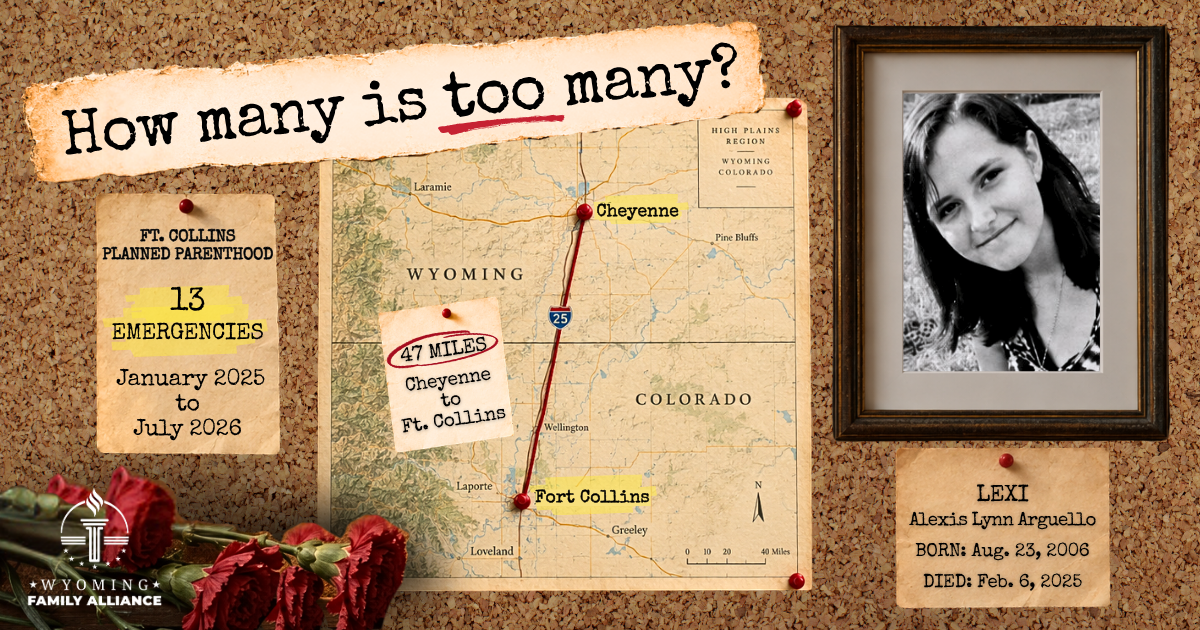
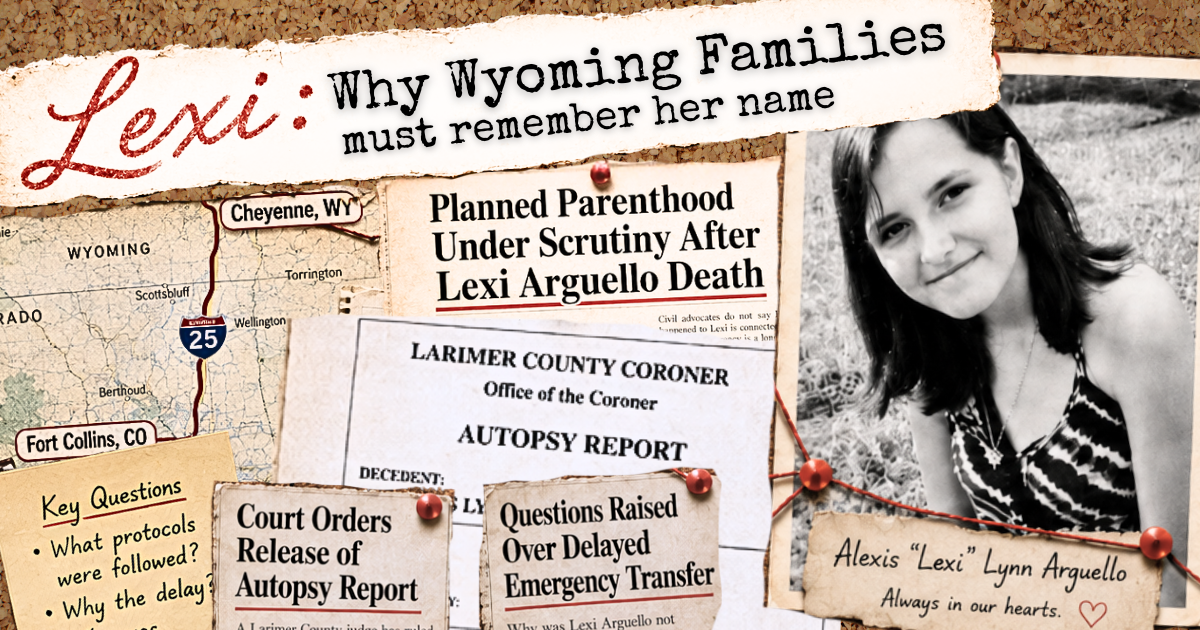
Map showing the 47 miles between Cheyenne, Wyoming and the Fort Collins Planned Parenthood, beside a photo of Lexi Arguello.
September 20, 2026
Eighteen-year-old Lexi Arguello died after an abortion at the Planned Parenthood 47 miles from Cheyenne. Colorado law does not require anyone to inspect it.
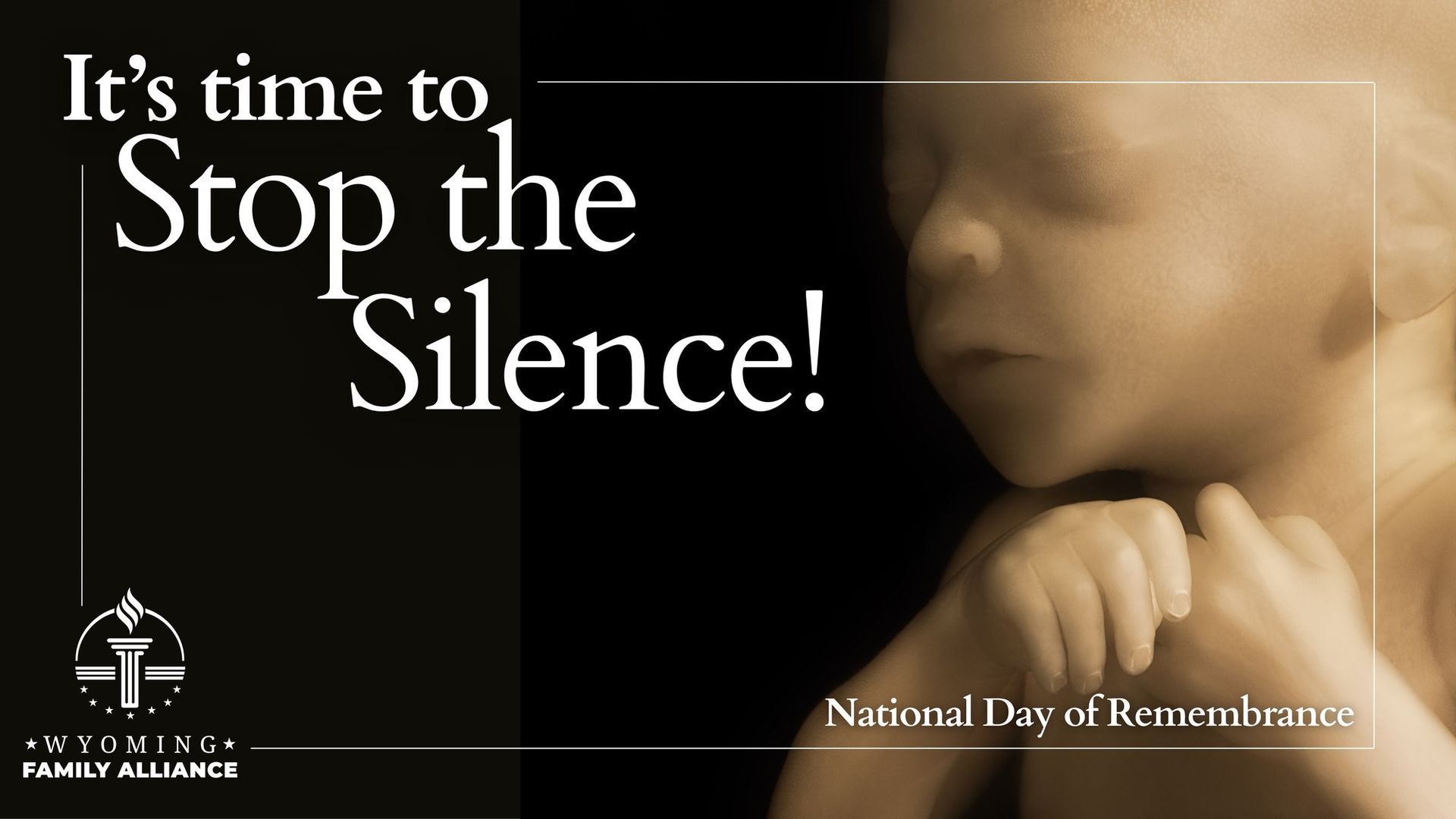
It’s time to Stop the Silence. National Day of Remembrance for Aborted Children. Wyoming Family Alli
September 12, 2026
The sourced numbers behind WFA’s Stop the Silence video, plus every Wyoming pregnancy resource center, the Abortion Pill Rescue Network, and help after abortion.
August 21, 2025
5 Ways Wyoming Can Reform Teacher Education With so many aspects of Wyoming’s education system needing reform, the scope of challenges can feel overwhelming. However, one strategic place to begin is at the root: the University of Wyoming’s College of Education. By strengthening the foundation of teacher preparation programs, we can cultivate more well-rounded, knowledgeable, and competent educators, setting the stage for lasting improvements in K–12 student success. Educators who are deeply grounded in core disciplines like math, science, English, and history shape the trajectory of entire communities. When teachers are well-prepared, they help ensure that future generations of Wyomingites—from ranchers and farmers to doctors and lawyers—have the skills needed to navigate life with confidence and competence. By investing in teacher training at the University of Wyoming, we lessen the pressure on local school systems to depend exclusively on state standards and bureaucratic mandates to guarantee teacher performance. Effective teachers can deliver meaningful instruction and foster higher academic achievement without being constrained by checklists or excessive testing requirements. The James G. Martin Center for Academic Renewal published the Blueprint for Reform: Teacher Preparation , which highlights these issues within higher education and outlines actionable steps for improvement. By applying these recommendations at the University of Wyoming’s College of Education, we can better prepare future teachers and ultimately strengthen outcomes for K–12 students across the state. Below are five ways Wyoming can reform teacher preparation: 1. Return to the Basics: Build Phonemic Awareness and Phonics Phonemic awareness—the ability to hear, identify, and manipulate sounds in spoken words—is the first step in learning to read. Once children master this skill, they can progress to phonics, where letters and groups of letters are connected to sounds and used to decode words. Together, these skills give children the tools to “crack the code” of written language, laying a strong foundation early in their learning journey. Applying these concepts has been repeatedly proven as one of the most effective methods for learning to read . Unfortunately, many Wyoming students are not benefiting from these proven methods. According to the 2024 National Assessment of Educational Progress (NAEP), literacy rates in the state continue to decline. Thirty-two percent of students read below the basic level—meaning nearly one in three Wyoming students cannot read at grade level. Only 27 percent demonstrate proficiency, and just 9 percent achieve advanced reading skills. These sobering statistics highlight a critical need: educators must be trained to teach reading using proven, research-backed methods —beginning with phonemic awareness and continuing through systematic phonics. By equipping teachers with the skills to build strong literacy foundations, we give students a greater chance at long-term academic success. While Wyoming students score slightly above the national average in English on the NAEP assessment, the difference is small. Nationally, 40 percent of students perform below the basic level of proficiency, and Wyoming’s results are only marginally better. These numbers are daunting, reflecting a nationwide literacy crisis in which our state is far from immune. Language proficiency is the cornerstone of student success. To master subjects like math, science, and social studies, students must first be able to read, write, and comprehend effectively. In the American education system, logic, reasoning, and comprehension are cultivated through English. Without strong literacy skills, students risk falling behind not just in English, but across every area of learning. One factor contributing to Wyoming’s literacy challenges may be the inconsistent or insufficient emphasis on teaching phonemic awareness in our schools. The National Council on Teacher Quality (NCTQ) reviewed the University of Wyoming’s teacher preparation programs and found that, while four of the five core components of the science of reading are covered, phonemic awareness—the ability to hear and manipulate sounds in spoken words—is not addressed adequately. This omission is critical, since phonemic awareness is a foundational skill for early reading success. Some attribute the gap to the growing burden of state-mandated standards and regulations. With so much content, compliance, and assessment to manage, essential instructional skills—like phonemic awareness and phonics—are too often sidelined. The result is that new teachers enter classrooms less prepared to help students master reading. To reverse this trend, the University of Wyoming should take proactive steps to reintegrate phonemic awareness into its curriculum. This would include offering a dedicated course in the science of reading and ensuring that all elementary education teacher candidates are equipped with the tools they need to teach reading effectively from day one. By doing so, Wyoming can strengthen early reading outcomes and reduce the long-term costs of remediation in its schools. 2. Strengthen Core Content Knowledge Strengthening reading instruction is the first step, but it cannot stand alone. Teachers must also have a solid grounding in core academic subjects to help students connect what they read to the broader world. Without strong content knowledge, even the best literacy instruction falls short. Another NCTQ report highlights gaps in the University of Wyoming’s undergraduate teacher preparation program, particularly in the core content knowledge required of candidates. The review found that essential subject areas—such as Economic Principles and Exchange, The Economy, and U.S. History: 20th Century and Beyond—are not adequately covered. To prepare well-rounded educators, teacher training must extend beyond English, math, and science. Subjects like history, geography, and economics are equally important in shaping informed citizens and effective teachers. The University of Wyoming should require coursework in modern U.S. history and ensure stronger grounding in economics for its elementary education teacher candidates. 3. Depoliticize Teacher Preparation Teacher education programs should eliminate politicized curriculum requirements—such as DEI-focused programming—that can divert attention from student-centered, evidence-based instruction. Wyoming is already moving away from DEI policies, and the University of Wyoming has an opportunity to align with this shift. Concerns remain that DEI and Critical Race Theory concepts continue to influence faculty perspectives and course content at the University. To ensure Wyoming’s teachers are unbiased and focused on academic fundamentals, a re-evaluation of current teaching approaches at the University of Wyoming is warranted. Research—including the James G. Martin Center’s comprehensive report on the politicization of education schools —shows that ideological content can narrow the focus of teacher preparation and undermine academic rigor. With the passage of HB 0147 , which prohibits DEI programs and institutional discrimination in Wyoming’s public institutions effective July 1, 2025, the University should respond proactively. A comprehensive content audit—conducted in partnership with the Wyoming Department of Education—would help ensure that teacher preparation aligns with the state’s standards and expectations for elementary education. While individual beliefs cannot—and should not—be dictated, institutional policies can be refined to keep teacher preparation centered on academic excellence, rather than on ideological trends. 4. Expand Teacher Pathways The Praxis II examination , currently required for teacher licensure in Wyoming, does not measure mastery of the profession, but rather a minimum competency in teaching subjects. Wyoming should consider new pathways into teaching, including alternative licensure programs—or perhaps even, as some legislators have proposed, eliminating licensure altogether. Alternative certification offers practical options. States like Florida and Michigan administer their own teacher certification exams, and the American Board provides an online pathway that has been adopted in 15 states. These models demonstrate that strong alternatives exist beyond the Praxis system. In the 2025 legislative session, Wyoming lawmakers considered HB0100 , which would allow school districts and charter schools to employ teachers without a state-issued certificate or permit, provided candidates pass a background check and meet locally established hiring policies. The bill placed full discretion in the hands of districts, without requiring a degree in education—or even a degree at all—so long as candidates could demonstrate sufficient knowledge or experience in the subject area they were hired to teach. If Wyoming reconsiders this approach, it could significantly expand the pool of capable teachers, particularly in rural areas, and encourage districts to operate in a more free-market environment. By competing for strong educators, school systems would gain flexibility to hire the best talent available, helping to revitalize Wyoming’s education system. 5. Strengthen Accountability The University of Wyoming’s College of Education must be held to higher standards in how it prepares future teachers. To foster meaningful change, accountability should include mandated coursework in areas such as economics, history, and the science of reading. Regular evaluations by the University’s Board of Trustees—reviewing programs and course syllabi—would help ensure alignment with best practices in literacy instruction and core content knowledge. Additionally, separating teacher preparation coursework from the broader undergraduate degree requirements could allow for a more focused, effective training experience. As members of the Great Wyoming Family, we have a duty to steward our communities and our future well. Providing the best education to our children requires giving the best preparation to our educators. Whatever paths our students pursue as adults, they should be able to rely on the strength of a solid education—and we must ensure they receive it.
Show More
Map showing the 47 miles between Cheyenne, Wyoming and the Fort Collins Planned Parenthood, beside a photo of Lexi Arguello.
September 20, 2026
Eighteen-year-old Lexi Arguello died after an abortion at the Planned Parenthood 47 miles from Cheyenne. Colorado law does not require anyone to inspect it.
It’s time to Stop the Silence. National Day of Remembrance for Aborted Children. Wyoming Family Alli
September 12, 2026
The sourced numbers behind WFA’s Stop the Silence video, plus every Wyoming pregnancy resource center, the Abortion Pill Rescue Network, and help after abortion.
Sunlit preschool classroom with colorful chairs, tables, toys, and storage shelves
By STATUS: Governor Signed HEA No. 0052 Into Law June 29, 2026
Understand Wyoming's SF0088 law restricting sex offenders from living near child care facilities. Stay informed on child protection efforts.
Show More

Share this article